AI Chatbot for the Buyers Edge Member Portal
Giving Users Instant Answers with AI
My Role
Lead Product Designer – UX Strategy, Research, Design & Execution
Team
Product Manager
3 Developers (iOS, Android, Web)
UX Team (Design Reviews & Iterations)
Results & Metrics
Results
Members Served
68,000 members across 4 products
Support Time Freed
About 1,300 hours a year
Report Generation Time
45% faster
Chatbot Adoption
+55% in the first 3 months
Overview
Buyers Edge Platform is one of the largest Group Purchasing Organizations (GPOs) in the world, specializing in helping businesses save money by optimizing purchasing decisions, finding rebates, and uncovering cost-saving opportunities. With massive amounts of data available in the customer portal, users often felt overwhelmed trying to extract key insights. After evaluating multiple solutions, we determined that an AI-powered chatbot—designed to function similarly to ChatGPT—would be the most effective way to deliver fast, accurate, and personalized insights to users.
The Problem
Members had the data they needed in the portal, but getting to it was slow. Finding one metric meant clicking through several dashboards, and a custom report meant waiting on the support team. Any AI answer also had to be trustworthy, because buyers make purchasing decisions from it.
Research Insights
Users struggle to find key metrics quickly—navigating the portal takes too long.
They want AI to simplify reporting—not just answer basic questions.
Speed matters—waiting for reports is frustrating.
Trust is crucial—users need transparency on where AI pulls its data from.
Understanding the Problem
To fully understand the challenge, I conducted deep discovery research to identify how users interact with their data and what pain points exist. This included user interviews with key customer segments, stakeholder discussions with product managers and customer support teams, and exploring alternative support methods such as FAQs and live agents.
User Interviews: Gathering Insights Firsthand
We interviewed 5 customers representing restaurants, hotels, universities, and casinos—each with different reporting needs. Sessions were 30-minute Zoom calls facilitated by our customer success team, recorded and analyzed to identify key patterns.
10 Key Questions That Shaped Our Solution
Through strategic questioning, we uncovered critical user expectations and frustrations with data retrieval in the portal.
- First Impressions — How intuitive does the chatbot feel?
- Task Completion — How easy is it to get the answers you need?
- Guidance & Clarity — Are the chatbot's instructions clear?
- Response Relevance — Does the AI provide accurate and useful responses?
- Efficiency — How does the chatbot compare to other support options?
- Personalization — Does the chatbot feel tailored to your needs?
- Trust & Reliability — How confident are you in the responses?
- Preferred Support Channel — When would you choose the chatbot over other options?
- Accessibility — Are there any usability or accessibility issues?
- Overall Satisfaction — What would improve the chatbot experience?
Defining Core Requirements
From our research, we distilled the chatbot's core purpose into four pillars. After consulting with our development team, we decided to build the chatbot on a large language model connected to real-time data from the Buyers Edge Platform.
- Instantly deliver key metrics in an easy-to-read, conversational format
- Allow users to generate custom reports without deep data analysis knowledge
- Prioritize accuracy and trustworthiness in every AI response
- Integrate seamlessly into the existing customer portal experience
Design Exploration & Ideation
Before jumping into design, I led a collaborative FigJam ideation session with stakeholders and developers to outline user flows for different chatbot interactions, key touchpoints where users would engage with AI, and potential challenges and technical constraints. This exercise ensured cross-team alignment before moving into wireframing.
Competitive Research: Learning from Industry Leaders
To ensure the best experience, I conducted a competitive analysis reviewing AI-driven chat solutions from platforms like Intercom and Drift, ChatGPT's conversational model and best practices, and enterprise AI tools used in finance and procurement. This research helped us differentiate our chatbot while leveraging best-in-class UX patterns.
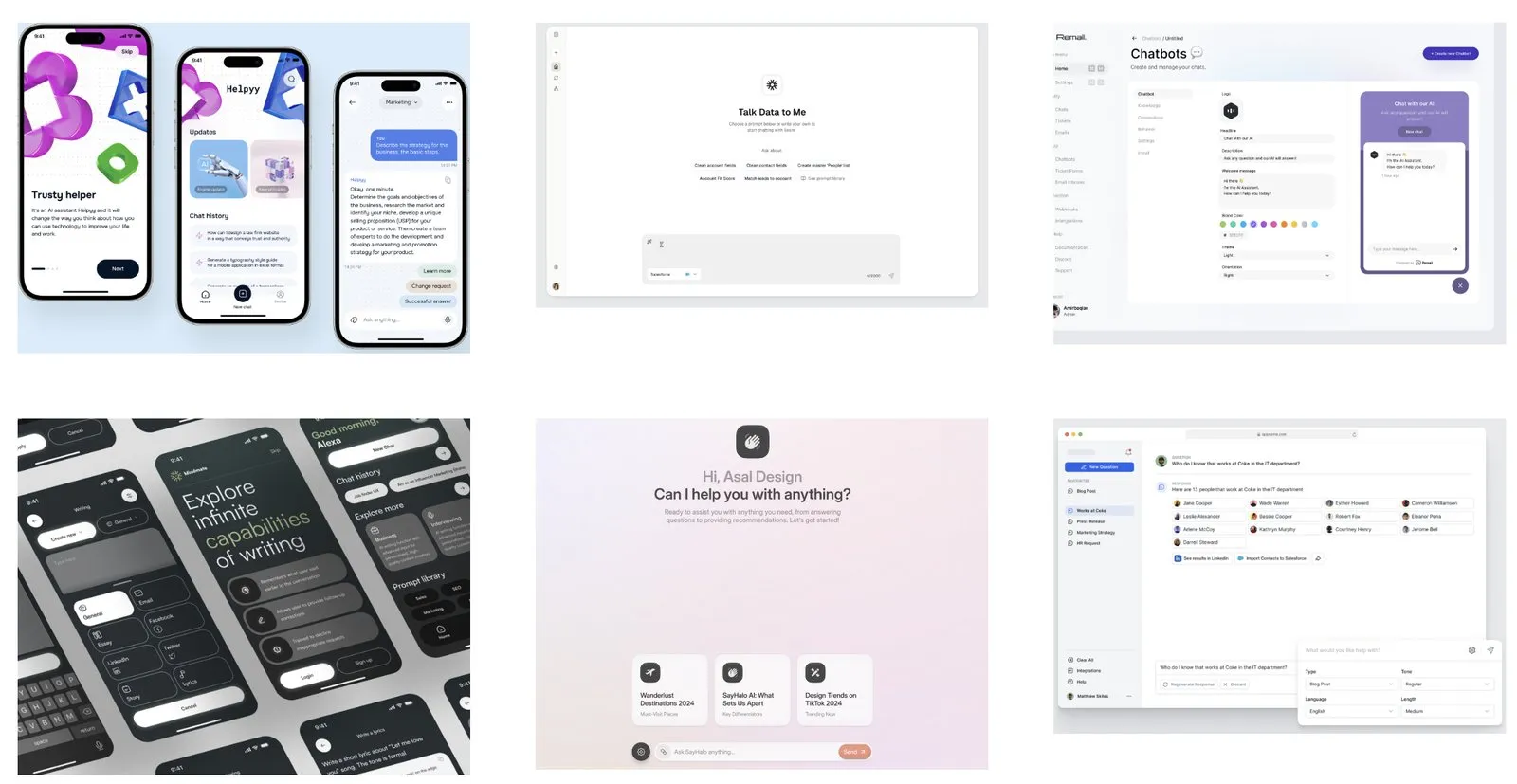
Competitive Research — AI chatbot interfaces across platforms
Wireframing & Prototyping
I created low-fidelity wireframes in Figma, focusing on clarity of chatbot responses, user flows for generating reports, and seamless integration into the existing dashboard. Each iteration went through multiple review rounds including UX team review, PM review, and stakeholder feedback. This collaborative, feedback-driven approach ensured we refined the chatbot before moving to high-fidelity mockups.
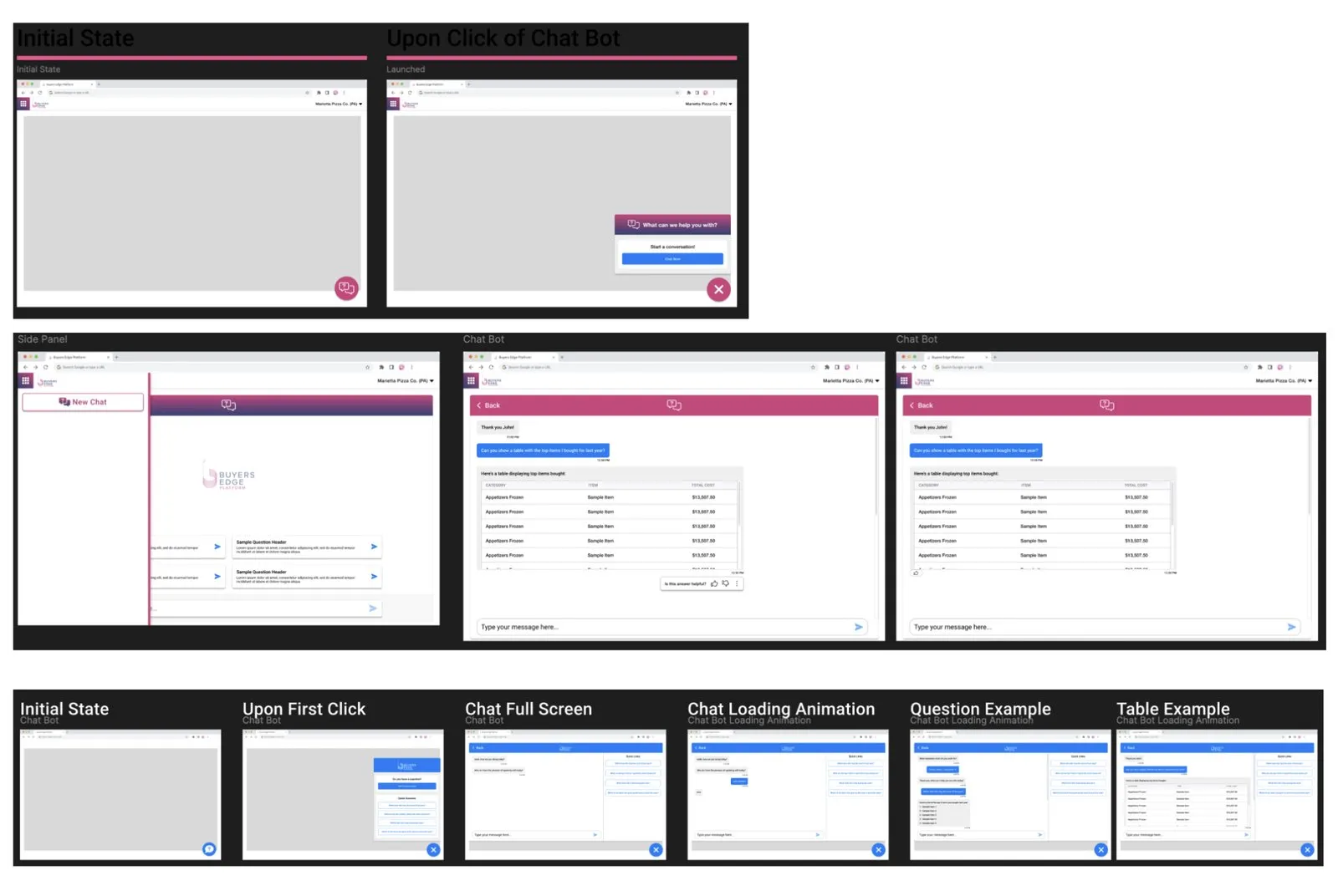
Wireframe Iterations — Desktop & Mobile Chatbot States
Hi-Fi Mockups & User Testing
Once the high-fidelity designs were ready, we conducted live user testing with our original interview participants. Users interacted with a fully clickable Figma prototype, shared their screens, and completed assigned tasks while providing live feedback. They could also leave comments directly in the prototype for additional insights.
- Users found the chatbot intuitive—learning curve was minimal
- AI-generated responses were highly relevant, but trust indicators were needed to show data sources
- Users loved the ability to generate reports on demand without navigating complex dashboards
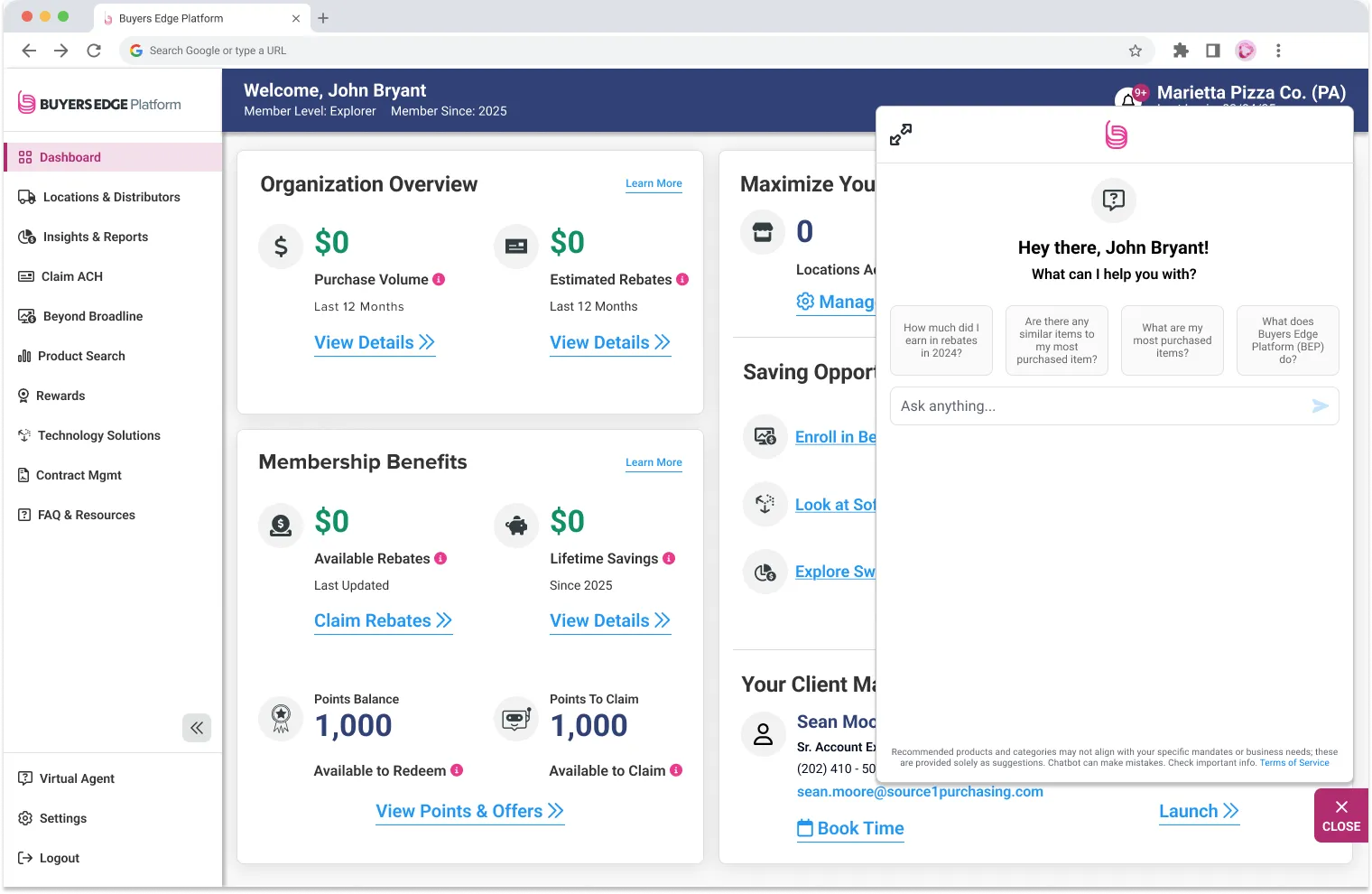
Desktop — Chatbot Side Panel
Launch & Continuous Improvement
After launch, we set up tracking funnels via FullStory to analyze chatbot interactions and identify user engagement trends, drop-off points where users abandon chat sessions, and areas for improvement based on real-world usage. This data-driven feedback loop allowed us to continuously refine the experience post-launch.
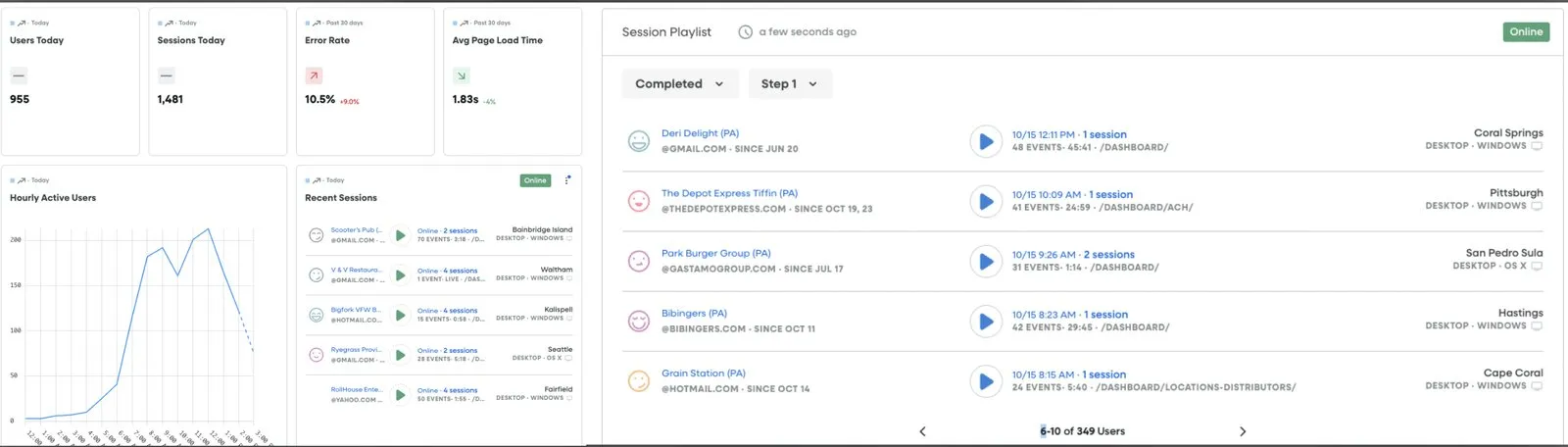
FullStory Metrics — Tracking chatbot engagement and session analytics
Impact
Users can now retrieve reports and key metrics in seconds—eliminating frustration. Support teams can focus on complex inquiries as the chatbot handles routine questions. Buyers Edge Platform now offers a truly AI-powered, self-service experience that enhances customer satisfaction.
Final Thoughts
This project wasn't just about building a chatbot—it was about changing how users interact with complex data. By focusing on usability, clarity, and personalization, we transformed the Buyers Edge Platform from a data-heavy portal into an AI-powered insights engine. The result is a self-service experience that gives users instant access to the insights they need, when they need them.